Showing posts with label Ancient Greeks and Romans. Show all posts

Wednesday, 19 June 2013

Ancient Roman Cheesecake


I’ve been playing around with some ancient Roman recipes recently, and wanted to share this one with you. The ancient Romans had two kinds of cheesecake, a savoury version (libum) and a sweet version (savillum). Savillum was eaten as part of secunda mesa (dessert) and was one of the Romans’ favourite sweets. It might also be offered as a sacrifice, though a lighter (and more cake-like) honey cake was more often used for this purpose. Here is a recipe from Cato’s De Agri Cultura (On Agriculture), from around 160 BC.

Cato says:

Take ½ pound of flour, 2½ pounds of cheese, and mix together as for the libum; add ¼ pound of honey and 1 egg. Grease an earthenware dish with oil. When you have mixed thoroughly, pour into a dish and cover with a crock. See that you bake the centre thoroughly, for it is deepest there. When it is done, remove the dish, cover with honey, sprinkle with poppy-seed, place back under the crock for a while, then remove from the fire. Serve in the dish, with a spoon. (translation from LacusCurtius)

And here’s a version you can try. You'll need the following ingredients:

15 Bay Leaves
3 Eggs
225g Ricotta Cheese
½ Cup of Plain Flour
½ Cup of Honey (Make sure it’s good honey! This will be the main flavour)
1 Teaspoon Grated Orange Zest
1 Teaspoon Lemon Juice
Poppy Seeds/Nuts/Honey to Drizzle

You can find the recipe on allrecipes.com here. Don't forget to grease the sides of the dish so the cheesecake doesn’t stick too much. I would advise leaving the cake to cool and fully set before eating. I served it chilled with warm honey drizzled on top, and it was yummy! You can then choose to sprinkle on a topping if you like - poppy seeds as Cato suggests, or nuts if your prefer. Enjoy!


Tuesday, 30 April 2013

Myths and Legends - Book Reviews


Myths and Legends is a new series of books from Osprey, publisher of military history books combining historical information with beautiful illustrations and images. The series will examine “the great stories that have echoed down through time and have helped to shape our cultures” (from the Osprey website).


Jason and the Argonauts


The voyage of Jason and the Argonauts and their hunt for the Golden Fleece is one of the most enduringly popular of all of the Ancient Greek heroic myths. Accepting the quest in order to regain his kingdom, Jason assembled a legendary crew including many of Greece's greatest heroes such as Hercules, Orpheus, Atalanta, Telamon, and the twins Castor and Pollux. With this band of heroes and demi-gods, Jason set sail in the Argo on a journey across the known world. During their quest, the Argonauts faced numerous challenges including the harpies, the clashing rocks, the Sirens, Talos the bronze man, the sleepless dragon that guarded the fleece, and of course the fickle will of the gods of Olympus.

Dr. Neil Smith retells this classic myth, examining its origins, its history, and its continued popularity. The text is supported by numerous illustrations both classical and modern, including numerous artwork plates especially commissioned for this work. (Synopsis from Goodreads)
 ---

First off, this is a beautiful book. Fantastic illustrations, a good use of images of ancient artefacts and statues, colourful and pleasing to flick through; this is the kind of book that you want to pick up the instant you see it.

Jason and the Argonauts tells the myth of the ancient Greek hero Jason and his voyage to claim the Golden Fleece. It begins early in the myth and tells each stage in detail, providing background facts and information. Despite studying Classics at university, I’m actually not that familiar with the Jason myth – it’s about the only one that I didn’t touch on – and there were a lot of new things to learn in this book. The story is told in an engaging style and it’s a very easy read. The illustrations also add a lot to the story, helping the reader to imagine various events. The book is obviously meant as an introduction to the myth, and it does this well.

I did enjoy reading about Jason’s journey, but I couldn’t help wishing there had been a little more extra information alongside it. I loved the little asides that talked about ancient Greek ships and weapons, or plotted a map of the Argo’s route, or that added background to various characters, and I would have really liked more of these. For instance, a diagram of a Greek ship might have complemented this particular myth very well. I would also have loved a little more information about Atalanta, the one woman hero on the voyage. She is briefly mentioned, and it’s obviously rare to find a female ancient Greek hero, so it might have been fun to find out how she came to join Jason’s quest.

This is a fun book, well put together and visually very appealing. I think anyone interested in mythology, or in learning about ancient Greek heroes would enjoy it, and could find a place for the collection on their shelves.


Dragonslayers


From legend and mythology to The Hobbit and A Game of Thrones, the dragon is a perennial favorite in the fantasy genre.

With its fiery breath, scaly armour, and baleful, malevolent stare, the dragon became the ultimate symbol of evil and corruption in European folklore and mythology. Often serving as a stand-in for Satan, or the power of evil gods, dragons spread death and hopelessness throughout the land. Only heroes of uncommon valour, courageousness, and purity could hope to battle these monsters and emerge victorious. Those that did became legends. They became dragonslayers. The list of dragonslayers is small, but it is filled with great and legendary names. Hercules, Beowulf, Cuchulain, Sigfried, Lancelot, and Saint George all battled to the death with dragons. Other heroes such as the Danish King Frotho, the French Saint Mercurialis, the Polish champion Krak, and the Russian warrior Dobrynya Nikitch might be less well known to western readers, but also fought and defeated dragons. This book will retell the greatest legends of this select group of warriors, while examining the myth of the dragonslayer in a historical, mythological, and even theological context. (Synopsis from Goodreads)
 ---

I enjoyed this book more than Jason and the Argonauts. It looks at the myths and legends of dragon-slayers throughout history, telling their stories and looking at various information surrounding each myth, such as historical records and recurring themes. I liked how the author didn’t limit himself to a rigid modern (and European) definition of what a dragon is, but looked at how ideas of dragons have changed through time and in different societies. This allowed him to include snake-monsters, sea-serpents, wurms and other nasties, and it was fascinating to see how dragons and dragon-slaying legends began and how they developed.

I really loved the amount of additional information that the author provided in this book. I found details about sources and historical records fascinating, and I enjoyed little asides about how the various legends had been used in film and literature, as well as potential real-world influences on the legends that involved real historical figures (crocodiles seem to have been a common culprit). There was so much in this book that I didn’t know (for example, spiked armour pops up a lot in the British dragon-slaying legends). I also didn’t expect there to be so many dragon-slayer stories that I’d never heard of before. The book was very well researched and a joy to read.

This was a really fun and informative book, with some wonderful illustrations and images that really brought the stories to life. Both these beautiful and interesting books represent a very strong start to the Myths and Legends series. I’ve already got my eye on the next titles!


Monday, 31 December 2012

The Song of Achilles - Book Review


Greece in the age of heroes. Patroclus, an awkward young prince, has been exiled to the court of King Peleus and his perfect son Achilles. Despite their differences, Achilles befriends the shamed prince, and as they grow into young men skilled in the arts of war and medicine, their bond blossoms into something deeper - despite the displeasure of Achilles's mother Thetis, a cruel sea goddess. But when word comes that Helen of Sparta has been kidnapped, Achilles must go to war in distant Troy and fulfill his destiny. Torn between love and fear for his friend, Patroclus goes with him, little knowing that the years that follow will test everything they hold dear. (Synopsis from Amazon)

---

The Song of Achilles is a retelling of The Iliad for a modern audience, written in a literary style rather than a historical epic. In a lot of ways it’s similar to Mary Renault’s books, but I’m going to avoid comparing this to Mary Renault at every turn as, let’s face it, no author is really going to come out of that well.

Madeline Miller writes with a beautiful, almost lyrical style that at the same time is very easy to read, like a gentle breeze. This immediately gives the book a wistful, almost dream-like quality which I thought was surprisingly effective. It may be based on The Iliad, a very brutal and earthy book, but this novel does something completely different with the subject matter. I found that the dreaminess emphasised the idea that this is a semi-mythical story, slightly vague and ambiguous from so many retellings and so many years of history. However, despite this the characters felt very solid and alive, and their fears and longings were real. Often a dreamy book can create passive, dull characters, but this never happens here. Madeline Miller handles this difficult style perfectly, creating something both lovely and moving.

Thursday, 13 September 2012

Ante's Inferno - Book Review


Ante’s Inferno, by Griselda Heppel, tells the story of 12-year-old girls Ante and Florence, as they journey through the Underworld with a boy called Gil who died a hundred years earlier. Following a path that leads to the centre of Hell, they face strange dangers and mythical monsters, while at the same time learning more about each other. For Ante, worse than the dangers of the Underworld are the fears that Florence may actually be dead, and that she, Ante, may have killed her.

Monday, 28 May 2012

The Sewer Demon - Book Review


Euge! I won a signed copy of The Sewer Demon by Caroline Lawrence in a Twitter competition from the Big Book Babble! This sent me into slightly unreasonable levels of excitement. Partly because I’ve never won anything in a prize draw before, but mainly because The RomanMysteries series has been a favourite of mine for a long time.

But, aren’t they children’s books? Yes, of course they are, but like Disney cartoons, they’re absolutely delightful for grownups too. I would class them as ‘family books.’ They’re funny, clever, exciting, and historically accurate. I think they are some of the best stories set in the Ancient World in either adult or children’s fiction. Besides, I’m fairly sure I never actually grew up...

I was introduced to the Roman Mysteries books by my cousin’s daughter, who a) was in love with the series, and b) was amazed and overjoyed that she had written to the author, Caroline Lawrence, and Caroline had actually written back! Not all authors will do this, mainly because they are so busy, but I remember having a similar experience when I was younger and it really does make such a difference to a child. Anyway, I was studying Classics at university at the time, so “it’s about Romans” was (and still is, if I’m honest) enough on its own to get me excited. A combination of ‘Romans’ and ‘friendly author’ meant they were a must-read. I borrowed one from the library, reading horribly out of order (The Sirens of Surrentum), and on the strength of that one book alone I bought a set of all the books written to that point, with the beautiful second generation covers. Every single one was good, and I’ve been collecting them ever since.

The Sewer Demon is a companion book to The Roman Mysteries series, moving away from the Roman Mystery children to focus on a new main character, a boy called Threptus. Readers of The Roman Mysteries books might remember Threptus, who popped up in The Man from Pomegranate Street, and in ‘Threptus and the Sacred Chickens’ in The Legionary from Londinium and other Mini Mysteries. Threptus is an eight year old boy living in Ostia, once a beggar, but now working for Floridius, who is a prophet, soothsayer, amulet-seller and dealer in sacred chickens! This is the first in a new series called The Roman Mystery Scrolls, which seems to be aimed at slightly younger readers, with shorter books and ruder humour.

The same easy-going and humorous style of The Roman Mysteries series is found in this book, with plenty of jokes that both young readers and their parents can enjoy. The curses (Pollux!) and exclamations like ‘Great Juno’s Beard’ always make me laugh out loud. Because the story is set in Ostia, familiar faces and places appear. At one point Threptus is forced to crawl through the town’s sewers, and learns why the local magistrate Bato should never eat cumin-dusted eggs. The mystery is intriguing and solving it is fun, with the usual variety of fascinating Roman facts and titbits incorporated into the story. I’ve never noticed anything un-historically accurate in a Roman Mysteries book, and the same goes here (makes sense – the author really knows the Ancient World).

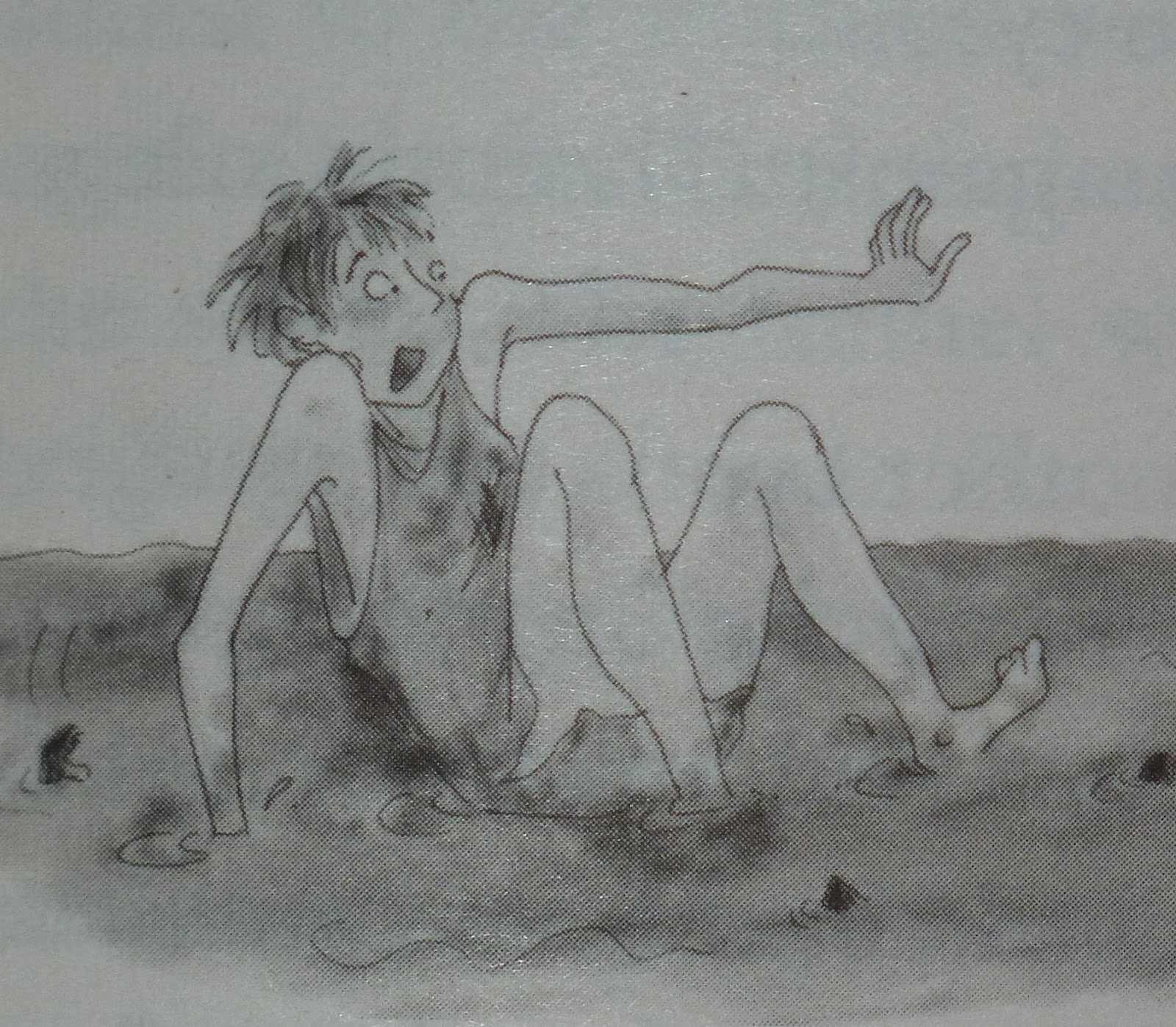
Caroline Lawrence has a wonderful ability to conjure up places and people so well in so few words, and her characters are always so alive they jump off the page. (The little illustrations that accompany each chapter pick up on this brilliantly. Here’s my favourite.) The pacing is spot on, there are no boring bits, and no scene is wasted or ‘filler.’ It’s a very easy read. This would make it a perfect book for younger readers or less confident readers, before diving into the more complex mysteries and plotting of the Roman Mysteries stories. It’s also a great companion book for readers who are already fans of the Roman Mystery world.

Thursday, 19 April 2012

2 Weeks of Movies - Immortals: The Incredible Tale of Theseus' Ineptitude

Immortals - 4.5/10


(some spoilers!)

Almost as bad as Conan. The visuals and the fights saved it from that distinction. And the fact that it didn’t send me to sleep.

But the story was bad. Reeeeeally bad. Hyperion (not a Titan, despite having the same name as one of the main Titans in Greek mythology and this being a movie about Titans), is searching for the Shining Bow of Plot so that he can release the Titans. This is because he hates the gods for letting his family die. The usual, in other words. Where are all these ‘vendetta against the gods’ movies coming from? It was the same with Clash of the Titans. Apart from the fact that it’s getting old very quickly anyway, it is COMPLETELY out of place in a film about Greek myth. Go up against the gods? Get a lightning bolt in your face. It’s that simple.

There are so many real Greek myths where heroes fight monsters and each other, go on exciting quests, explore mazes and sail to strange islands, face witches and evil magic... why not do one of those stories? Of course, this all happens while the gods look on and treat them like playing pieces in an oversized game of chess. That’s what Greek gods are like. They’re bastards and they’re proud of it.

But apparently in modern films the Greek gods are kindly, righteous beings who have sworn not to interfere in the mortal world because... it would prevent humans from having free will. (sigh) I can’t think of any sentiment less likely to come out of a Greek god’s mouth. And it seems they will not even interfere when a mortal man actually has the Shining Bow of Plot that will release the Titans and risk destroying everything. So Theseus has to stop it.

Yes, Theseus. The guy who killed the minotaur. The Greek hero with arguably the most interesting and richest mythology, with many different stories attached to his name. Of course, the film does not follow any of these stories, choosing to make up its own nonsensical plot instead. To be honest, the whole film would have worked better if they’d pretended it was a fantasy instead of a retelling of Greek myth. Then they could set their own rules and I would have been happier to accept them. I don’t even care that much about accuracy in stories about the ancient world (heck, I’m a fan of Xena), as long as they keep the feel or the spirit of it. This was so far removed it seemed a bit pointless.

Henry Cavill plays Theseus – that’s the guy from the Tudors, or, as we named him when we first saw him in Tristan and Isolde: Pretty, Son of Rufus. He did the best he could with a bad script. By the end of the film it is clear that Theseus is about the worst hero ever to have graced a cinema screen. He actually managed to fail in every conceivable way. He was supposed to stop Hyperion from getting the Shining Bow of Plot at all costs. What he actually did was get beaten in a few fights, then find the bow and take it out of its very well hidden resting place, right into the jaws of Hyperion’s finder dog. He then failed to stop Hyperion using it, and didn’t even stick around to help the gods clean up the mess. He did manage to kill Hyperion in the end. When it was too late. When Hyperion actually wasn’t a threat in any way anymore. On top of this, he slept with a virgin oracle, causing her to lose her powers of prophecy and knocking her up in the process. In every way, the people in this film would have been better off without him. However, this did not stop the gods from accepting him into Mount Olympus at the end and making him a god. But then, the gods were pretty hopeless too, so perhaps ineptitude is what defines a deity in Immortals.

The story was dire, but the film had some saving graces. The visuals were good, reminiscent of 300, and the fight scenes were well thought out and executed. Parts of the film were enjoyable to watch, when I wasn’t banging my head against the wall at Theseus’ incompetence (Theseus and Peter Petrelli would make a terrifying team). The acting wasn’t bad, and I liked the visual representation of the gods (it was different, but it worked. Yes even the helmets). The bellowing bull method of execution was a nice nod to the history of Greek tyrants, if a bit misplaced in this story. Unfortunately, all the style in the world could not have saved this film. It wasn’t as awful as Conan, but that’s about all I can say for it. And, hey, at least it wasn’t ‘Monsters.’